
Experiencing Elsewhere
SOAS, London / Tuesday 10th November 2015 / 3-5 pm
Russell Room, SOAS, University of London, Thornhaugh Street, Russell Square, London WC1H OXG
What does it mean to inherit different cultures and social spaces, and how does poetry articulate or translate the experience of elsewhere?
Poetry readings by Kavita Jindal, Sean Wai-keung, Kirsten Irving and Jennifer Wong,
chaired by Dr Cosima Bruno
Poem:Films for National Poetry Day
‘Poem:Films’ For National Poetry Day – 8 October 2015
Caroline Areskog Jones has created two shorts using words from my poems.
‘Parakeet’ and ‘Chaining the Ecstatic‘
View the ‘Poem:Films’ on youtube:
Parakeet
Chaining the Ecstatic
Texts of the poems:
Parakeet
You were brought here caged
then let go
you stayed
your mewls and chweek chweek
are incessant
you’re scarcely still
flap flap perch flap flap
you invader
you drove out the weaker
your obnoxious brightness
streaming against the grey weather
Where can you go
other than the trees nearby
after you found yourself
in unfamiliar terrain
you cannot roll back
to the moment of
the capturing hand
in that other land
you settle and multiply
your pattern unchanged
being lustrous being avian
You’re noisy because
you like gatherings
all squawking together
morning and dusk
when you feed
midday saved for
preening and loafing
nights for some quiet
breaking out at dawn
how well you’ve adapted
to being non-tropical.
Chaining the Ecstatic
As the white light on this summer’s day
is pulled back into the molten sky
white flowers begin to gleam
fresh against green hedges
in the slowpouring darkness.
White flowers gleam
while the garden’s other beauties
the scalding pinks
recede with the last of the light
dissolving into stems, pots, fences.
So heaven this is where I find you
laying your silk sheet on me
while I stand still in June
inhaling the white bouquet of life.
Poems On Buses


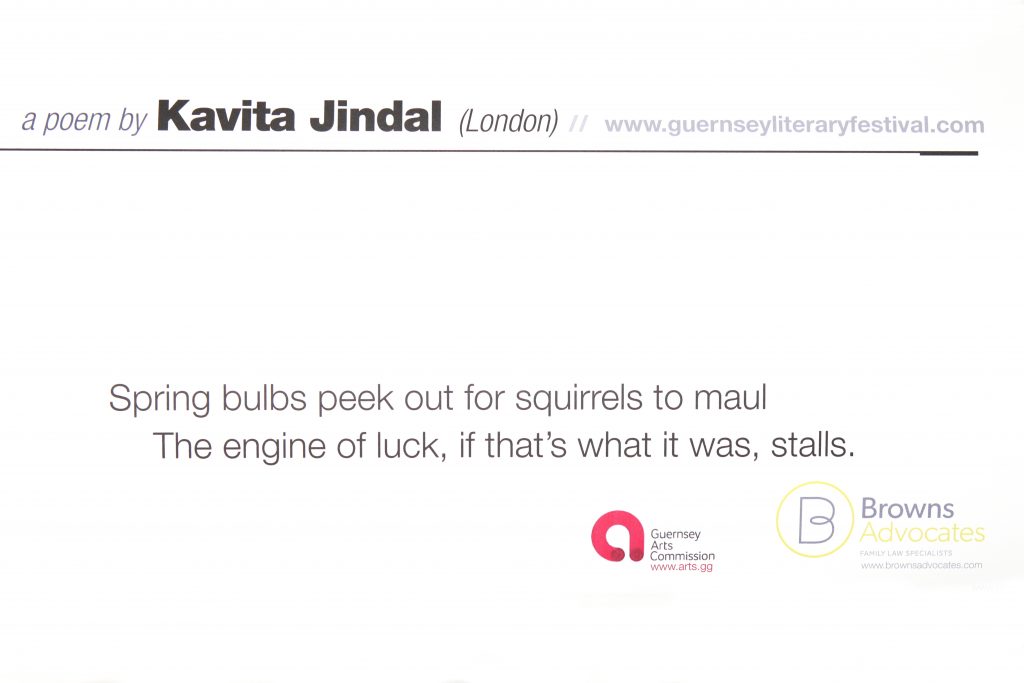
One of my poems was selected to be a ‘poem-on-the-move’, in a bus in Guernsey, from May to September 2014.
The poem was originally titled ‘March Misery Poem’.
Kudos to the judge; that was my reaction.
On the poster though, the key middle word has been abandoned. I can see that they don’t want bus passengers to be reading a ‘misery poem’ even though the title was tongue-in-cheek.
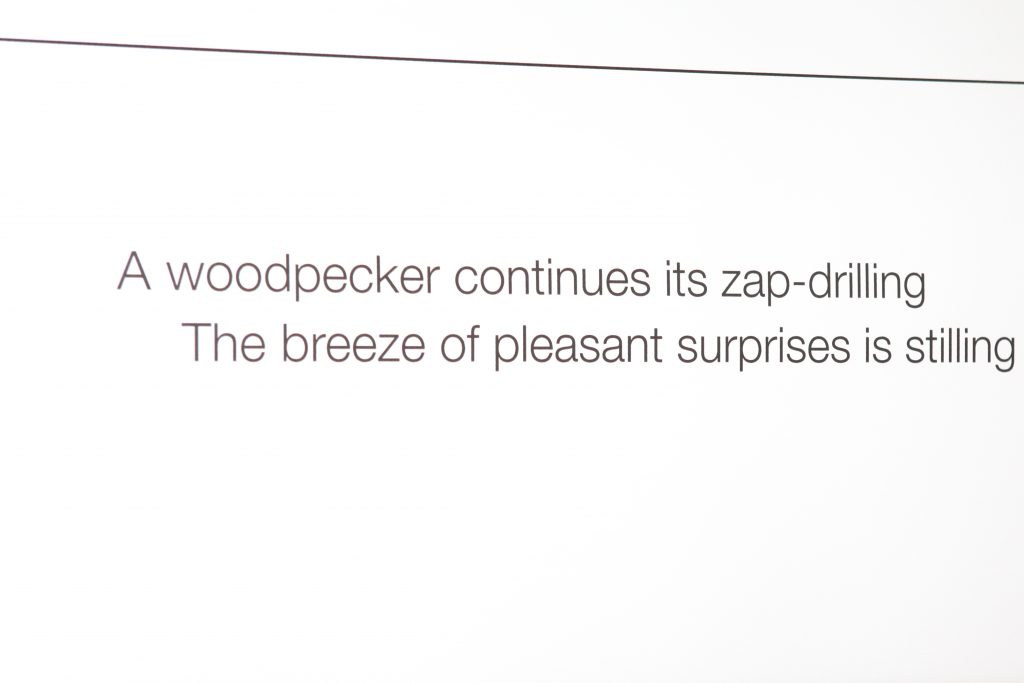
Thanks to the efforts of Liz Kerr (the photographer) and Jenny Down I have these great pictures of my poem on a bus.

Poem ‘FAUCET’
A woman
may buy a tool-kit and know how to use it
may change the washer, adjust the stopcock
swap the ball bearings
fix the leaky spigot with a spanner.
A woman may suggest to Nature
that for the next millennia
men become pregnant
a facetious fractious suggestion;
the woman knows her pleas
are just venting, as ineffectual
as hammering water.
A woman may not drive in Saudi Arabia
may not bike unless in a ladies’ only park
may not be seen in public without a male protector.
A woman must also be fertile
dribbling out male heirs;
she may spout songs in private
and dance in full Dior, smeared with make up
for her mirror and other ladies to see.
A village panchayat in Punjab declares
that mobile phones given to girls
leads them to pre-marital sex;
boys can have cell phones and call for help
when they’re in trouble, but females,
young things, must take it on the chin,
remaining on the drip-drip of advancement.
A woman there thinks: what if instead of aborting
the female foetuses, the nozzle was turned off
as if by a spell, a sorcery; no babies were born
to the women of this village, then the new elders
all men, would die out without replacement
and further afield too the taps would be fixed just so
by the women who knew how.
(After ‘Woman’ by Arun Kolatkar)
First published in The Feminist Times in November 2013
www.feministtimes.com/poetry-faucet-by-kavita-jindal
The Mechanics’ Institute Review: Issue 10
My Short Story ‘When You Go, You Leave A Farce’ is in
The Mechanics’ Institute Review: Issue 10
This is the 10th anniversary edition of the anthology, which is published annually by Birkbeck and is packed each year with short stories that cover a range of topics, all given a stylish slant by the quality of the writing.
HUBBUB
I”ll be reading an extract from my short story ‘When You Go, You Leave A Farce’ at Hubbub on 14 October, 2013.
The event runs from 7:30-9.30 pm and is held at The Harrison, 28 Harrison Street, Kings Cross, London WC1H 8JF.